
C programming: a comprehensive overview
C is a general-purpose, procedural programming language developed by Dennis Ritchie at Bell Laboratories in the early 1970s. It’s renowned for its efficiency, portability, and flexibility, often considered the “mother of programming languages” as it influenced many modern languages like C++, Java, and Python.
Key features
- Low-level memory access: C allows direct interaction with hardware and system resources through pointers.
- Portability: C programs are machine-independent and can run on various operating systems and platforms with minor modifications.
- Efficiency: C’s simplicity and direct hardware interaction lead to highly efficient code, making it ideal for systems programming and embedded systems.
- Structured language: C supports structured programming, allowing programs to be broken down into functions, enhancing readability and maintainability.
- Rich standard library: C provides a comprehensive set of functions for input/output, string manipulation, mathematical operations, and more.
- Extensibility: C allows for the creation and use of user-defined data types and functions, enabling customization and adaptation to various needs.
- Pointers: Pointers are crucial in C for memory management, manipulating data structures, and interacting with hardware.
- Recursion: Functions in C can call themselves recursively to solve problems, offering code reusability and backtracking functionality.
Applications
C finds wide application in various fields:
- System Software Development: Operating systems (Unix, Linux, Windows), device drivers, and embedded system firmware rely heavily on C for low-level interaction with hardware.
- Embedded Systems and IoT Devices: C’s efficiency and ability to work with limited resources make it a preferred language for embedded systems in automotive control units, smart home devices, and IoT applications.
- Compilers and Interpreters: C is instrumental in creating compilers (like GCC) and interpreters (like Python’s CPython interpreter) for other programming languages.
- Database Systems: High-performance database systems such as MySQL and Oracle utilize C for efficient data management, query processing, and transaction handling.
- Game Development and Graphics: C is the language of choice for developing game engines and graphics libraries, enabling high-performance rendering and complex game logic.
- Network Programming and Drivers: C is used in implementing network protocols (TCP/IP), web servers (Apache, NGINX), and device drivers for efficient network communication.
- High-Performance Computing (HPC) and Scientific Research: C’s speed and efficiency are crucial in scientific research and computational modeling for intensive calculations and large-scale simulations.

Advantages
- Fast execution and compilation speed.
- Efficient memory management through direct manipulation and dynamic allocation.
- Platform independence and portability.
- Large support community and rich libraries.
- Facilitates structured programming and code organization.
Disadvantages
- Manual memory management can lead to errors like memory leaks and buffer overflows.
- Limited built-in error checking and no exception handling mechanism.
- No native support for object-oriented programming (OOP) concepts.
- Steeper learning curve, especially for beginners.
- Lack of standardized string handling.
Learning resources
- Online Platforms: Coursera, Udemy, Learn-C.org, GeeksforGeeks, W3Schools, and others provide comprehensive tutorials and courses for learning C.
- Books: “The C Programming Language” by Brian Kernighan and Dennis Ritchie (K&R C), “Let Us C” by Yashavant Kanetkar, and “C The Complete Reference” by Herbert Schildt are popular choices.
- YouTube Channels: CodeWithHarry, freeCodeCamp.org, kodegod, ProgrammingKnowledge, and others offer video tutorials.
- Practice Websites: HackerRank, LeetCode, and GeeksforGeeks provide platforms to practice coding challenges.
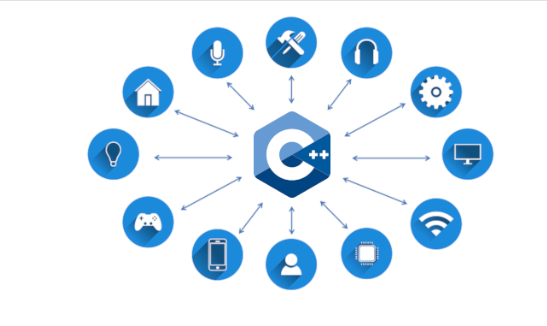
C is a foundational language for understanding the intricacies of computing systems and has enduring relevance in various applications, particularly in systems programming and embedded systems, . Learning C can provide a strong foundation for venturing into other languages and specialized programming fields.
AI responses may include mistakes.
Learning C programming can open doors to various career paths in software development, system programming, embedded systems, and more.
Here’s an overview of several C programming courses and resources available:
online platforms offering various courses
- Course: Offers a wide range of C programming courses and specializations from reputable universities like Duke University, the University of California, Santa Cruz, and the University of Michigan.
- Highlights: Introductory C Programming, C for Everyone: Programming Fundamentals, C Programming for Everybody, and C Programming with Linux.
course content examples
Many courses cover a similar range of topics, including:
- Introduction to C language
- Variables and data types
- Operators and expressions
- Control flow statements (if/else, loops, switch)
- Functions and modular programming
- Arrays and strings
- Pointers and memory management
- Structures and unions
- File handling
5. choosing the right course
- Consider your current programming experience and desired learning level (beginner, intermediate, advanced).
- Evaluate whether you need a structured course with assignments and quizzes or a more self-paced tutorial.
- Decide if you need a certification and explore courses that offer one.
- Look for courses with experienced instructors and positive reviews from other learners.
Learning C can be a rewarding experience, providing a solid foundation for a successful career in programming. By exploring these diverse options, you can find the perfect C programming course to suit your needs