
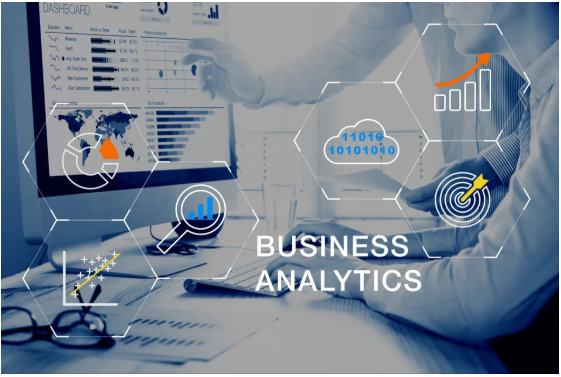
Business analytics courses: a comprehensive overview
Business analytics is a dynamic field that combines elements of business management, data analysis, and technology to help organizations make informed, data-driven decisions.
Key subjects in a business analytics course
A strong Business Analytics curriculum typically covers a blend of theoretical and practical topics aimed at developing strong analytical, technical, and communication skills. Some of the key subjects include:
- Foundational Statistics: Descriptive statistics, probability distributions, hypothesis testing, and regression analysis form the backbone of understanding and interpreting data.
- Data Analysis Techniques: Developing skills in working with raw data, extracting insights, and identifying patterns and trends is crucial.
- Programming Languages: Python and R are particularly popular for their data manipulation, visualization, and advanced analytics capabilities.
- Database Management: Understanding SQL (Structured Query Language) is essential for extracting, manipulating, and analyzing data from databases.
- Data Visualization: Learning to present data insights clearly and engagingly using tools like Tableau and Power BI is key for communicating findings to stakeholders.
- Machine Learning (Basics): Introductions to algorithms for predictive modeling and understanding how machine learning enhances business analytics.
- Business Intelligence (BI) Tools: Familiarity with tools like Power BI and Tableau helps analysts create dashboards and reports to present insights in an easily digestible format.
Learning formats
Business analytics courses are offered in various formats to cater to diverse learning preferences and needs.
Online Courses: Offer flexibility and convenience, ideal for working professionals or those who prefer self-paced learning. CourseDivine are popular options.
Classroom Training: Provides a structured learning environment with direct instructor interaction.
Hybrid Models: Combine online and in-person learning, offering a blend of flexibility and direct engagement.
Key features to look for in a course
When choosing a Business Analytics course, consider the following features to ensure it aligns with your goals:
- Comprehensive Course Content: Ensures coverage of essential topics like data analysis, statistical methods, predictive modeling, and data visualization.
- Expert Instructors: Learning from experienced professionals can provide valuable insights and practical knowledge.
- Hands-on Experience: Look for courses that offer projects, case studies, or simulations to gain practical application skills.
- Placement Assistance: Many courses offer support services like career counseling, resume building, and connections with potential employers.
- Certifications: Reputable institutions offer certifications that can enhance your credibility and career prospects.
Career opportunities and industry demand
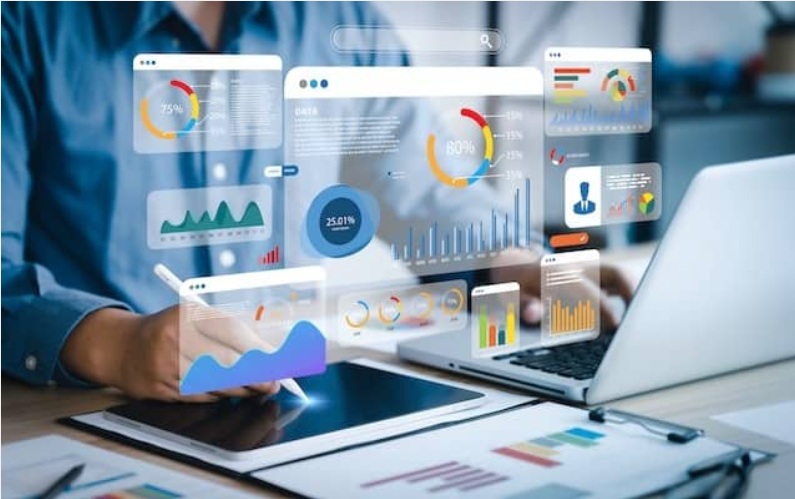
The field of Business Analytics offers a range of career opportunities due to consistent demand across industries. Potential roles include Data Analyst, Financial Analyst, Marketing Analyst, Business Intelligence Analyst, and Data Scientist. Salaries for Business Analytics professionals vary based on factors like experience and location. In India, the average salary for a Business Analyst is reported to be around ₹8,00,000 annually, with a typical range of ₹6 Lakhs to ₹12 Lakhs per year.
Ultimately, Business Analytics courses equip individuals with valuable skills for a career in a data-driven environment.
What is business analytics?
Business analytics refers to the process of using statistical methods, technologies, and practices to analyze historical and current business data to gain new insights that drive better strategic decision-making.
How does it work?
- It involves gathering and interpreting data to understand past and current business performance.
- It analyzes this data to identify patterns, trends, and relationships, uncovering valuable insights that may not be immediately obvious.
- It then uses these insights to make predictions about future trends and to recommend actions that can lead to better outcomes.
- Essentially, Business Analytics helps businesses to convert raw data into accurate and actionable business insights. It bridges the gap between raw data and strategic action, allowing businesses to move beyond intuition-based decisions to strategies that can be measured, optimized, and scaled for maximum impact
Key techniques
- Descriptive Analytics: Examining past and present data to understand what happened and why.
- Predictive Analytics: Using historical data and statistical models to forecast future outcomes.
- Prescriptive Analytics: Recommending the best course of action based on data analysis and predictions.
- Data Mining: Discovering patterns and relationships within large datasets.
- Statistical Analysis: Applying mathematical methods to interpret data and quantify relationships.
- Data Visualization: Presenting complex data and insights in an easy-to-understand visual format.
Importance and benefits :
- Improved Decision-Making: Businesses can make decisions backed by evidence and statistics, rather than assumptions or guesswork.
- Enhanced Operational Efficiency: Identifies bottlenecks and inefficiencies in workflows and processes to optimize operations and allocate resources effectively.
- Better Customer Insights: Deepens understanding of customer behavior and preferences for targeted marketing and improved customer experiences.
- Competitive Advantage: Allows businesses to identify emerging trends, adapt to market dynamics, and gain a competitive edge.
- Risk Mitigation: By analyzing historical data and predicting potential risks, companies can develop strategies to minimize financial or operational setbacks.
In essence, business analytics empowers organizations to leverage the vast amounts of data they generate to make smarter, more effective decisions, improve operations, and ultimately drive growth and success.
Types of Business Analytics
The four most popular types of business analytics are descriptive, diagnostic, predictive, and prescriptive. The fifth– cognitive analytics is a new type that employs AI, ML, and deep learning. Whilst each of these business analytics types is effective when used individually, they become extremely powerful when employed together.
Descriptive Analytics
Descriptive Analytics is used to analyse historical data to determine the response of a unit over a set of given variables. It tracks key performance indicators (KPIs) for a better understanding of the present state of a business.
It involves the following five steps:
- Deciding which business metrics will effectively evaluate performance against objectives
- Identifying required data as per the current business state
- Collecting and preparing data using various processes like depublication, transformation, and cleansing.
- Analyzing data for patterns to measure performance
- Presenting data in charts and graphs to make it understandable for non-analytics experts
Examples of Descriptive Analytics
- Summarizing past events, exchange of data, and social media usage
- Reporting general trends
Diagnostic Analytics

Diagnostic Analytics is one of those business analytics types that help understand why things happened in the past. Using drill-downs, data mining, data discovery, and correlations, you can comprehend the driving factors.
This advanced analytics method is usually employed as a preceding step of Descriptive Analytics to find the reasoning behind certain results in finance, marketing, cybersecurity, and more.
Examples of Diagnostic Analytics
- Examining market demand
- Identifying technical issues
- Explaining customer behavior
- Improving organization culture
Predictive Analytics
Predictive Analytics considers historical data trends for determining the probability of particular future outcomes. It uses several techniques like data mining, machine learning algorithms, and statistical modeling to forecast the likelihood of events.
Predictive analytics helps improve business areas, including customer service, efficiency, fraud detection and prevention, and risk management. It allows you to grow the most profitable customers, improve the operations of businesses, and determine customer responses and cross-sell opportunities.
Examples of Predictive Analytics
- Predicting customer preferences
- Detection of employee intentions
- Recommending products
- Predicting staff and resources
Prescriptive Analytics
Prescriptive analytics generates recommendations to handle similar future situations relying on past performances. It employs several tools, statistics, and ML algorithms for the available internal data and external data.
It gives you insights into what may happen, when, and why.
Examples of Prescriptive Analytics
- Tracking fluctuating manufacturing prices
- Improving equipment management
- Suggest the best course of action
- Price modeling
- Evaluating rates of readmission
- Identifying testing
Cognitive Analytics
Combining Artificial Intelligence and Data Analytics, Cognitive Analytics is one of the newest types of business analytics. It looks at the available data in the knowledge base and discovers the best solutions for the questions posed.
Cognitive analytics covers multiple analytical techniques to analyze large data sets and monitor customer behavior patterns and emerging trends.
Examples of Cognitive Analytics
- Tapping unstructured data sources such as images, text documents, emails, and social posts.
What Business Analytics Types Do Different Companies Prefer?
Top companies choose different types of business analytics. Often they employ several types of business analytics in a step-like process, starting from Descriptive Analytics and concluding with Prescriptive Analytics.
- Amazon uses descriptive and predictive analytics of customers’ historical shopping data for the prediction of the probability of a customer buying a product. It also uses these methods to personalize product recommendations.
- Microsoft uses prescriptive and predictive analytics to improve productivity and collaboration.
- Uber uses predictive modeling to estimate demand in real-time and has enhanced its customer support.
- Starbucks also benefits from predictive analytics to predict purchases and propose interesting offers.
- Apple’s Siri, Microsoft’s Cortana, and IBM’s Watson use cognitive analysis.

What Types of Business Analytics are Right for You?
Every business analytics type plays a significant role depending on the requirements. However, prescriptive analytics is one of the most important types and is thus opted for by most companies.
Descriptive analysis is the most suitable if you are aiming at analyzing the everyday reporting for your businesses.
When making assessments for future situations using ML and deep learning, use predictive analytics as it is a more advanced method.
To estimate the best possible options, opt for prescriptive analytics to get actionable insights instead of data monitoring. It best suits healthcare decision-makers needs in optimizing and reducing production costs.
When it comes to social media campaign analytics and other digital marketing analytics, diagnostic analytics helps view what works and what doesn’t for your campaigns.
You can use these four techniques sequentially, or you can jump directly to prescriptive analytics if you have identified the key area that requires optimization to reach the desired outcome.
Looking into the business strategies of top companies reveals that prescriptive and cognitive analytics are the front-runners in this spectrum.
Business Analytics Tools
From a simple spreadsheet with statistical functions to complex predictive modeling applications and data mining, business analytics tools enable users to gain deeper insights with much-needed accuracy.
Business analytics tools help analyze various business reports and data, generating the best possible outcome for users. For instance, OmniSci is a business analytics tool. It enables users to interactively query, visualize, and power Data Science workflows across massive data.
FAQs
1. What are the different types of analytics?
The different types of business analytics are mentioned below:
- Descriptive Analytics: Summarizing and describing past events
- Diagnostic Analytics: Examining past performance to find causes
- Predictive Analytics: Forecasting future events using historical data and models/ML
- Prescriptive Analytics: Recommending specific actions based on data analysis
2. What type of analytics is considered most crucial for businesses in general?
Prescriptive analytics is one of the key types of business analytics. It predicts future events in a business and outlines the steps to be taken to achieve the desired outcome. It produces guidelines and recommends actions to be taken, making it highly sought after in the industry.
3. What job positions are available for individuals with knowledge of Business Analytics?
If you have a comprehensive understanding and knowledge of Business Analytics, you can seek the following job positions:
- Business Analyst
- Information Security Analyst
- Data Analysis Scientist
- Quantitative Analyst
- Data Business Analyst
- Business Analyst Manager
- IT Business Analyst